

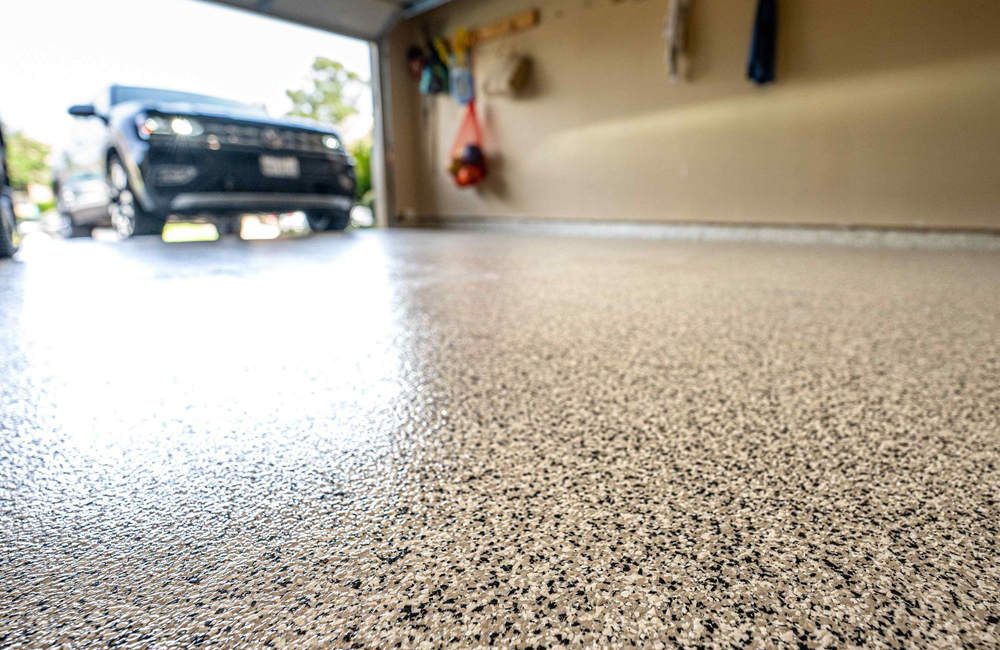
Taking Care of Your Epoxy Floor
One of the biggest selling points of epoxy and polyaspartic flooring is how easy it is to maintain. Compared to bare concrete, tile, or carpet, a coated floor takes very little effort to keep clean. But “low maintenance” doesn’t mean “no maintenance.” A few simple habits will keep your floor looking sharp for years.
Regular Cleaning
Sweeping and Dust Mopping
The simplest thing you can do is keep loose dirt and grit off the floor. Sand, gravel, and small debris act like sandpaper underfoot and can slowly dull the finish over time. A quick sweep or dust mop once a week (or more often if you’re tracking in a lot of dirt) goes a long way.
A soft-bristle push broom or a microfiber dust mop works best. Avoid stiff bristle brooms that can scratch the surface.
Mopping
For a deeper clean, mop the floor with warm water and a mild cleaner. A few drops of dish soap in a bucket of water works fine. You can also use a pH-neutral floor cleaner if you prefer something purpose-made.
Avoid harsh chemicals like bleach, ammonia, or acidic cleaners. These won’t damage a quality epoxy floor immediately, but over time they can break down the topcoat and dull the finish. Vinegar is another one to skip. It’s acidic enough to affect the gloss over repeated use.
Spot Cleaning Spills
One of the best things about a coated floor is that spills sit on the surface instead of soaking in. Oil, grease, chemicals, paint, and other common garage spills can be wiped up with a paper towel or rag. The sooner you get to it, the easier it is, but even dried spills usually come up without much effort.
For stubborn spots, a soft scrub pad with soapy water will handle most things. Avoid steel wool or abrasive scrubbers that could scratch the topcoat.
Seasonal Maintenance
Winter Care
GTA winters mean road salt, sand, and snowmelt on your garage floor for months. Salt can leave a white residue on the surface if left to sit. It won’t damage the coating, but it doesn’t look great.
The fix is simple: rinse or mop the floor periodically through the winter to clear off salt buildup. A quick rinse with a garden hose (if your garage has a drain) or a mop with warm water does the job. Some homeowners do this every couple of weeks during winter, and it keeps the floor looking clean.
Spring Deep Clean
After winter, give the floor a thorough wash to clear away the season’s buildup. Warm water with a mild degreaser works well. This is also a good time to inspect the floor for any chips, scratches, or wear spots that may have developed over the winter.
Protecting the Surface
Use Mats in High-Wear Areas
Placing mats or pads under jack stands, tool chests, or heavy equipment helps prevent point-load damage. While epoxy floors are tough, a concentrated load on a sharp edge can chip the surface. A simple rubber mat solves this.
Entryway mats also help catch grit and moisture before they spread across the floor, reducing wear and cleaning time.
Lift, Don’t Drag
Dragging heavy metal objects, toolboxes, or equipment across the floor can scratch the topcoat. Whenever possible, lift items or use a dolly with rubber wheels. Felt pads under furniture legs also help if you have workbenches or storage units sitting on the floor.
Mind the Hot Tires
Hot tire pickup is a common concern with coated garage floors. When you park after a long drive, the tires are hot and can sometimes leave marks on the surface. With quality polyaspartic and hybrid systems, this is rarely an issue. But if you notice marks forming, letting tires cool before parking (or using tire mats) can help.
When to Call a Professional
If you notice areas where the coating has chipped down to the concrete, peeling at the edges, or significant dulling that cleaning doesn’t fix, it may be time for a professional touch-up. Small chips can often be spot-repaired. Larger areas may need a fresh topcoat.
A topcoat refresh is much less involved (and less expensive) than a full redo. It’s a good option when the base layers are still intact but the surface has lost its gloss or picked up visible wear.
The Bottom Line
Epoxy and polyaspartic floors are about as low-maintenance as it gets. Sweep regularly, mop occasionally, clean up spills when they happen, and rinse off salt in the winter. That’s it. Do those things and your floor will look great for years.
Have questions about caring for your floor, or need a repair or refresh? Contact us and we’ll help you out.