

Why Canadian Winters Are So Hard on Garage Floors
If you live in GTA or anywhere in Canada, your garage floor takes a beating every winter. That’s why choosing the best garage floor coating for Canadian winters matters more than most people realize. Road salt, sand, slush, and snowmelt get tracked in every time you pull into the driveway. Water pools on the floor, seeps into cracks, freezes overnight, and expands. Over time, this freeze-thaw cycle breaks down bare concrete, causing spalling, pitting, and crumbling surfaces.
On top of that, tire chains, snow blowers, and heavy winter gear add physical wear. A bare concrete floor doesn’t stand a chance long-term. The right coating protects the concrete, keeps your garage clean, and makes spring cleanup a lot easier.
What to Look for in the Best Garage Floor Coating for Canadian Winters
Not every garage floor coating is suited for Canadian conditions. Here’s what matters most:
Moisture resistance: The coating needs to seal the concrete and prevent water from getting underneath. If moisture gets trapped between the coating and the slab, it will freeze and push the coating right off.
Salt and chemical resistance: Road salt (calcium chloride, magnesium chloride) is corrosive. Your coating needs to stand up to it without breaking down or staining.
Flexibility at low temperatures: Some coatings become brittle in the cold and crack when the concrete shifts. A good winter coating maintains some flexibility even at -30C.
Slip resistance: Wet, slushy garage floors are slippery. Textured finishes and decorative flakes add grip, which is important for safety during the winter months.
Top Coating Options for GTA Garages
Polyaspartic Coatings
Polyaspartic is one of the best choices for Canadian garages. It handles temperature extremes well, stays flexible in the cold, and resists UV damage so it won’t yellow. It also cures fast, which means your garage is back in service quickly even if you’re getting it done in the fall before winter hits.
Polyaspartic coatings repel water and resist road salt without staining or softening. For GTA homeowners, this is often the top recommendation.
Hybrid Epoxy + Polyaspartic Systems
This is the most common professional system for garage floors in cold climates. The epoxy basecoat bonds tightly to the concrete and provides thickness and chemical resistance. The polyaspartic topcoat adds UV protection, abrasion resistance, and fast cure time.
The combination gives you the strengths of both products without the weaknesses of either one alone. It’s the system we install most often for GTA garages.
Full Flake Flooring Systems
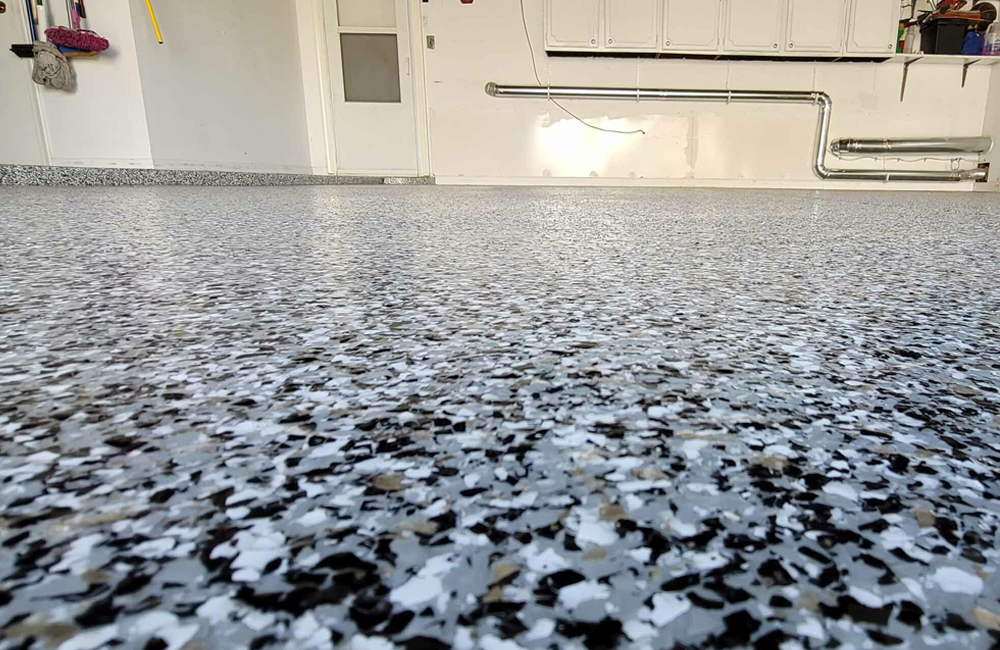
Flake systems aren’t a coating type on their own. They’re a decorative layer added between the base and topcoat. But they’re worth mentioning because the flakes add texture, which improves slip resistance on wet floors. They also hide dirt, tire marks, and minor imperfections better than solid-colour floors.
In a Canadian garage where the floor is constantly wet for months, a full-broadcast flake system is practical and good-looking.
What About Standard Epoxy?
Standard epoxy can work in a garage, but it has some drawbacks in cold climates. It can become brittle at very low temperatures, and it’s more prone to hot tire pickup (where warm tires pull the coating off the floor). It also yellows with UV exposure if your garage gets direct sunlight.
If budget is a concern, epoxy is still a solid upgrade over bare concrete. But for the best performance through GTA winters, a polyaspartic or hybrid system is the stronger choice.
Coatings to Avoid
Concrete paint: Floor paint sits on top of the concrete without bonding properly. It peels quickly, especially in wet or cold conditions. It’s not a coating. It’s paint, and it won’t last.
Thin DIY epoxy kits: Most hardware store kits lay down a coat that’s only 2-3 mils thick. That’s not enough to handle the salt, moisture, and temperature swings of a Canadian winter. Expect peeling within the first season or two.
Acrylic sealers: These provide minimal protection and wear off quickly. They’re better suited for decorative indoor concrete than a working garage floor.
The Importance of Proper Prep in Cold Climates
Surface preparation matters everywhere, but it’s even more critical in climates with freeze-thaw cycles. If there’s any moisture in the concrete slab, it will eventually work its way up and push the coating off from underneath. That’s why professional installers test for moisture before applying anything.
Diamond grinding creates the surface profile needed for a strong bond. Crack repair prevents water from getting into the slab. A proper vapour barrier or moisture-mitigating primer addresses any moisture issues. Skip any of these steps and you’re setting the floor up to fail.
When’s the Best Time to Coat Your Garage Floor?
In GTA, the ideal window for garage floor coatings is late spring through early fall when temperatures are moderate and humidity is manageable. That said, polyaspartic coatings can be applied in a wider temperature range than epoxy, so fall installations are very doable if you’re planning ahead for winter.
The worst time to coat a garage floor is mid-winter with the door open and temperatures below freezing. If you’re thinking about it now, the sooner you book, the sooner your floor is protected before the next winter season.
Our Recommended Systems for Canadian Winters
Our most popular options for GTA homeowners are epoxy flake flooring for its durability and visual appeal, and quartz broadcast systems for garages or outdoor areas where slip resistance matters most. Both hold up extremely well against the conditions described above.
Protect Your Garage Before Next Winter
A quality floor coating turns your garage from a crumbling concrete box into a clean, durable space that handles everything an GTA winter throws at it. Get a free quote and find out what system makes the most sense for your garage.